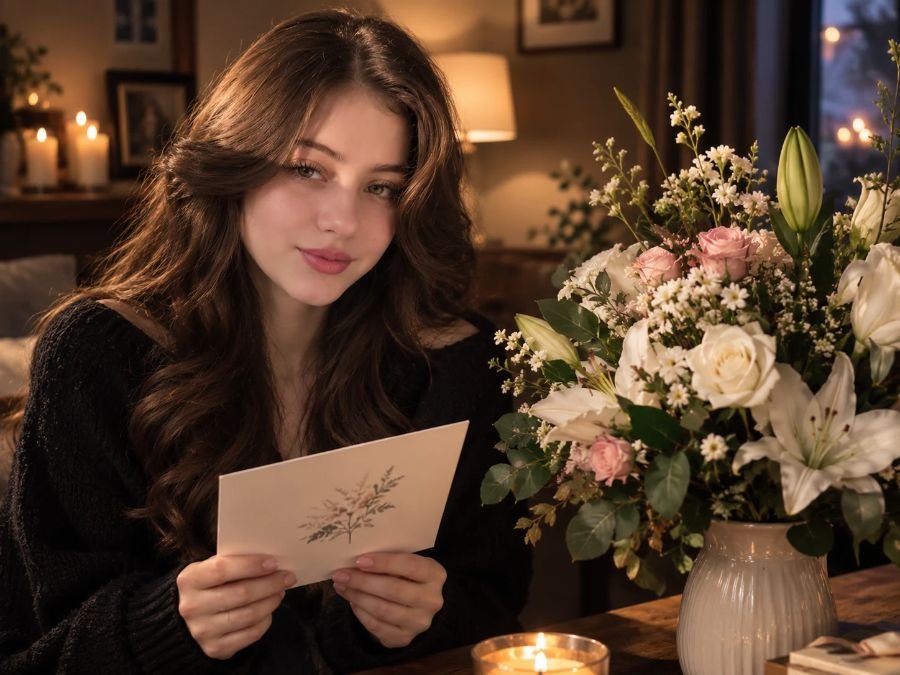
When someone sends flowers after a death, writing a thank you for sympathy flowers message can feel like one more thing to manage when there is already a lot going on. You may appreciate the gesture deeply but have no idea how to put that feeling into words.
The good news is that a sympathy thank-you does not need to be formal or lengthy. The most appropriate message is usually simple: acknowledge the flowers, recognize the thought behind them, and add a detail that makes the note personal if you feel able to.
If you are searching for thank you for sympathy flowers wording, the examples and guidance below are designed for real situations, from a message to a close friend to a more formal note for a colleague or group.
How to Write a Thank You for Sympathy Flowers Message
Start with what actually happened. Someone took the time to send flowers, so there is no need to search for a complicated opening.
You could write:
Thank you for arranging the flowers and having them sent to our home. We noticed the care behind the gesture and were very grateful for it.
That is enough on its own.
If the flowers were sent in memory of someone you lost, mentioning their name can make the message feel more connected to the occasion:
Thank you for the flowers you sent in memory of Anna. It was comforting to see her remembered with such care.
The tone can change depending on your relationship with the sender. A message to your sister will naturally sound different from one sent to a coworker. There is no single formula that every sympathy thank-you has to follow.
Do You Have to Send a Formal Thank-You Note?
No. The best format depends on the person and the way you normally communicate.
A handwritten card can be a good choice for a formal relationship or when the flowers arrived with a sympathy card. A text may be perfectly natural for a close friend. An email can work well for someone you usually communicate with professionally.
The important part is the acknowledgment, not the stationery.
For example, if a friend normally messages you by phone, sending a long formal card may feel less natural than a sincere text:
I saw the flowers you sent. Thank you for remembering us and for taking the time to do something so thoughtful.
If the sender is a business contact or someone you know mainly through work, you might choose a more reserved version:
Thank you for the flowers and for your kind message. I appreciate you remembering my family at this time.
Six Sympathy Flower Messages for Different Situations
Rather than collecting dozens of nearly identical sentences, it is more useful to choose wording based on why you are writing and who will receive it.
1. Thank You for Sympathy Flowers From a Close Friend

A close friend may have been part of your support system throughout the loss, so the note can acknowledge more than the flowers.
Thank you for sending the arrangement and for checking in on me. The flowers were a lovely surprise, but knowing you were there for me mattered even more.
This works because it recognizes the friendship rather than treating the flowers as an isolated gift.
2. Thank You for Sympathy Flowers From a Family Member
When a relative sends flowers to the family, a message can recognize the shared connection to the person who died.
Thank you for choosing the flowers for Dad’s service. Seeing them there alongside the other family arrangements made the day feel a little more personal.
If several relatives are responding together, you can use “we” and speak for the family.
3. Thank You for Sympathy Flowers From a Coworker
Professional relationships usually call for warmth without becoming overly intimate.
Thank you for arranging the flowers and for remembering my family. I was grateful to receive them, especially during such a busy and difficult week.
This is suitable for a colleague, manager, or professional acquaintance while still sounding personal.
4. For flowers delivered to your home

A home delivery gives you an opportunity to mention something specific about where you received them.
Thank you for having the flowers delivered to the house. We placed them near the window, and they became a quiet reminder of the people who have been thinking of us.
The small detail makes the note feel written for that particular sender.
5. For flowers sent to a memorial service
If the arrangement was part of a service, mention the occasion rather than simply calling them “beautiful flowers.”
Thank you for the arrangement you sent for Michael’s memorial. We appreciated having something from you there as we gathered to remember him.
This makes it clear that you noticed not only the flowers but also their connection to the person being remembered.
6. For a group of people
Flowers may come from an entire office, team, group of friends, or extended family.
In that situation, one message can acknowledge everyone:
Thank you to everyone who contributed to the flowers. It was a generous thing to do, and our family was glad to see your names included with the arrangement.
If one person organized everything, you can send that person a separate note.
What If You Do Not Know the Sender Very Well?
You do not need to pretend to have a close relationship that does not exist.
A straightforward message is often better:
Thank you for sending the flowers and for remembering our family. I appreciate the care behind your gesture.
For someone you know through work, a community group, a neighbor, or another formal setting, keeping the wording respectful and uncomplicated is perfectly appropriate.
You can also mention the person’s specific connection if that feels natural:
Thank you for the flowers you sent after hearing about my mother.Your kind words were very meaningful, and I appreciate you taking the time to reach out.
How to Make a Sympathy Thank-You Sound Personal
The easiest way to make your note different from a generic card is to include one detail that belongs to your situation.
Think about what you actually noticed.
The sender may also have offered support during a difficult time.
You may also want to acknowledge the well wishes that came with the flowers.
Perhaps:
- the flowers were a particular variety
- the sender knew the person who died
- the arrangement arrived at your home
- the sender included a personal message
- the flowers were displayed at a memorial
- the sender helped organize an arrangement with other people
- the flowers reminded you of something connected to your loved one
For example, instead of writing:
Thank you for the flowers. I really appreciate them.
You might say:
Thank you for the small arrangement of white roses. We placed it beside the photograph from our wedding, and it was especially meaningful to have it there.
The second version does not need exaggerated emotion. The detail does the work.
Should You Mention the Person Who Died?
You can, but you do not have to.
If the flowers were specifically sent in memory of someone, using their name can make the response more direct:
Thank you for remembering Daniel with the flowers you sent. It was good to know that you were thinking of him.
If mentioning the person’s name feels too difficult, simply thanking the sender is completely fine:
Thank you for sending the flowers. I appreciated you reaching out.
Your comfort matters more than following a particular wording rule.
Thank You for Sympathy Flowers After a Funeral
“Funeral flowers” can refer to arrangements sent to a funeral home, place of worship, memorial service, or another gathering. Your thank-you can briefly identify the occasion so the sender knows exactly what you are referring to.
For example:
Thank you for the flowers you sent to the service. We noticed the arrangement and were grateful that you chose to remember Sarah in that way.
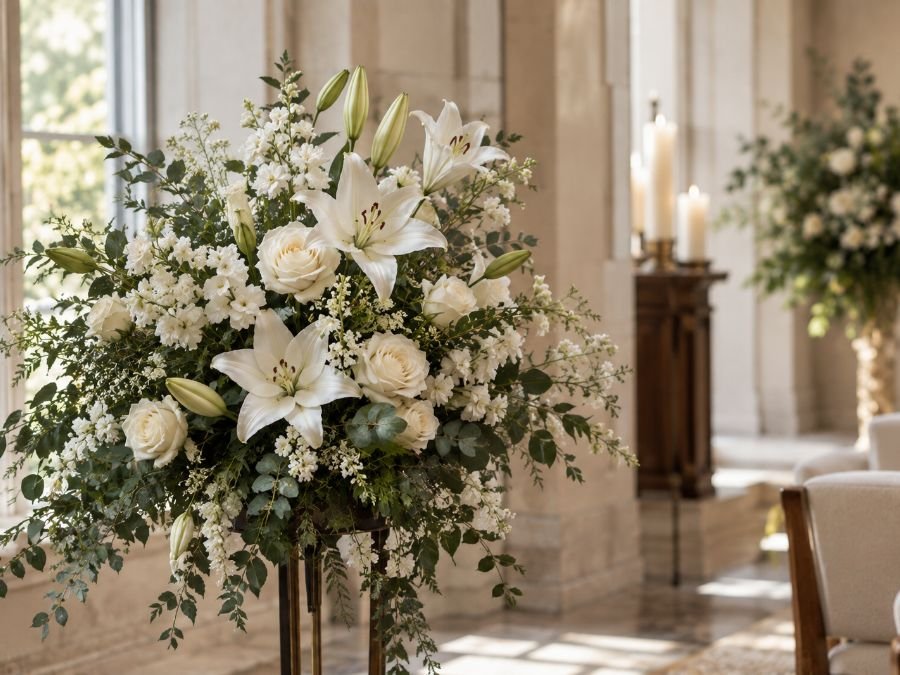
For an arrangement from a business or organization:
Thank you to everyone at the office for the flowers sent for the memorial. It was thoughtful of you all to remember our family.
There is no need to describe the entire funeral or explain everything that happened. Keep the note focused on the gesture.
Is a Text Message Acceptable?
For many personal relationships, yes.
A text can be especially useful when you want to acknowledge the flowers quickly but are not ready to sit down and write several formal notes.
A natural text might look like this:
I wanted to thank you for the flowers. I saw them when they arrived, and I really appreciated you reaching out.
Or, for a close friend:
I saw what you sent. Thank you. It meant a lot that you remembered us.
Short does not automatically mean impersonal. A message that sounds like something you would actually say can feel much more genuine than a polished paragraph copied from a card.

How to Write a Sympathy Flower Thank-You Email
Email can be useful when the relationship is professional or when the sender lives in another country and email is already your normal way of communicating.
You could write:
Subject: Thank you
Dear [Name],
Thank you for the flowers you sent after our loss. I appreciated your kindness and the time you took to reach out to my family.
Best wishes,
[Name]
For a professional contact, you do not need to share private details about your grief. A clear acknowledgment is enough.
How to Send a Late Thank You for Sympathy Flowers
There is no reason to abandon the message because several days or even weeks have passed.
A delayed note can simply acknowledge that you are only now getting around to writing:
I wanted to thank you for the flowers you sent. Things have been very busy since the funeral, but I did not want more time to pass without telling you how much I appreciated your gesture.
You do not need a long explanation for the delay.
If the sender already knows what your family has been dealing with, they will likely understand why a thank-you did not arrive immediately.
Thank You for Sympathy Flowers From Several People
When several people send individual arrangements, writing completely different notes to everyone can become exhausting.
A useful approach is to keep a basic structure but personalize one part of each message.
For example:
Thank you for the flowers you sent to the house. I especially appreciated your note about Mum.
For another person:
Thank you for the arrangement you sent for the service. It was lovely to see your name among the people remembering Dad.
You are not required to create a completely different message for every person. One genuine detail is often enough.
When a Simple “Thank You” Is Enough
There are situations where adding more words can actually make the message feel less natural.
If you barely know the sender, a short note may be ideal:
Thank you for the flowers and for reaching out to our family.
If you are replying by text:
Thank you for sending the flowers. I really appreciated it.
If you are exhausted and cannot write more:
Thank you. I received the flowers and am grateful that you thought of us.
You do not have to explain your emotions to prove that you are grateful.
Common Mistakes to Avoid
Making the note sound like a greeting card
If the words do not sound like something you would normally say, simplify them.
Trying to explain your grief
The purpose of the message is to acknowledge the sender. You do not need to provide a detailed account of what you have been experiencing.
Using the same emotional phrase repeatedly
If you are writing several notes, vary the wording naturally. Not every message needs to mention comfort, support, kindness, or gratitude in exactly the same way.
Apologizing excessively for a late response
A brief explanation is enough. The message should remain focused on appreciation.
Making the message too formal for the relationship
A close friend may find a highly formal note strange. Likewise, a professional contact may not need an intensely personal message.
Forgetting the specific gesture
If someone went out of their way to send flowers, mention that action. It makes the response more meaningful than a vague “thanks for everything.”
A Simple Way to Write Your Own Message
If none of the examples above sounds right, use your own experience as the starting point.
Think of these four questions:
What did they send?
Flowers, an arrangement, a wreath, or a group contribution?
Where did you receive them?
At home, at a funeral, at a memorial, or somewhere else?
What connection did they have with the person who died?
Friend, relative, coworker, neighbor, or acquaintance?
What specific detail did you notice?
A favorite flower, a personal card, their name on a group arrangement, or the timing of the delivery?
Then put two or three answers into a sentence.

For example:
Thank you for the lavender arrangement you sent for the memorial. Knowing that you remembered Emma and chose something she would have liked made the gesture especially meaningful.
That is more personal than trying to find the “perfect” sympathy phrase.
Need Help Finding the Right Words?

If you know what you want to say but are struggling to put it into words, try our free message generator. You can create a thoughtful starting message for your situation and then personalize it with your own details.
Create Your Message for Free →
Do You Need to Send a Thank-You to Everyone?
Not necessarily in the same way.
Some people may receive a personal card. Others may get a text or email. A family member may be thanked in person. A whole workplace may receive one group message.
The relationship, circumstances, and your own energy can all affect the choice.
There is no need to turn gratitude into another source of pressure while you are grieving.
FAQs
What is a good way to say thank you for sympathy flowers?
Mention the flowers directly and add one specific detail about why the sender’s gesture was appreciated.
Should I send a sympathy flower thank-you by text?
A text can be appropriate when you normally communicate with the sender that way, particularly with friends and relatives.
Is it okay to send a thank-you note weeks later?
Yes. If you were unable to respond sooner, a sincere message is still worth sending.
Should I say “I” or “we”?
Use “I” when you are speaking personally and “we” when the message represents your household or family.
What should I write to a coworker who sent flowers?
Keep it warm and professional by acknowledging the flowers and thanking them for taking the time to remember your family.
Conclusion
A sympathy flower thank-you does not have to sound polished or formal. What matters is that the sender understands you noticed their gesture and appreciated the thought behind it.
Choose the format that feels comfortable, whether that is a handwritten card, text, or email. If you can, include one real detail about the flowers, the service, or your connection with the sender. That small detail can turn a routine thank-you into a message that feels genuinely yours.