
Most articles about this phrase give you a list of copy-paste lines and call it a day. But here’s the problem: copy-paste lines are exactly why so many “thanks for your patience” messages feel hollow.
This guide is different. Instead of just handing you sentences, you’ll get an actual system for building the right message every time, plus a few things most guides never mention, like how wait-time length should change your wording, and why this phrase works on a psychological level. By the end, you won’t just have examples. You’ll know exactly how to write your own.
Why “Thanks for Your Patience” Messages Feel Fake
Here’s the honest truth: people can tell when a thank-you is copied straight from a template. Phrases like “we value your patience during this time” show up so often that readers skip right past them.
The fix isn’t finding a fancier sentence. It’s understanding what actually makes gratitude sound real. A genuine thank-you always has three things: a reason, a feeling, and a next step. Miss any one of these, and the message falls flat.
That’s exactly what the framework below is built to fix.
The A.E.R.T Formula for Saying Thanks for Your Patience
Here’s a simple structure you can use for almost any situation, whether it’s an email, a text, or a phone call. Think of it as A.E.R.T:
- A – Acknowledge the wait happened. Don’t skip this or pretend it didn’t.
- E – Explain briefly why, without over-explaining or making excuses.
- R – Reassure them that things are handled or moving forward.
- T – Thank them, using natural words instead of a stiff phrase.
Here’s what that looks like in one short message:
“I know this took longer than it should have (Acknowledge). We were double-checking the details to avoid any mistakes (Explain). Everything’s sorted now (Reassure). Thanks for your patience while we got it right (Thank).”
Four small parts, one message that actually feels human.
How Long Should You Wait Before Saying Thanks for Your Patience?

Here’s something most articles skip completely: the right words depend on how long someone actually waited. A ten-minute delay and a three-day delay should never sound the same.
Short wait (minutes to an hour): Keep it light and casual. A quick “thanks for hanging on” is enough.
Medium wait (a few hours to a day): Add a short reason. People start wondering what happened, so give them a small explanation along with your thanks.
Long wait (multiple days): This needs the full A.E.R.T formula, and often a small extra gesture, like a discount, a priority fix, or a personal follow-up call.
Matching your tone to the actual wait time is what separates a message that feels thoughtful from one that feels like a copy-paste reflex.
How to Say Thanks for Your Patience in Different Industries
Generic examples only go so far. Here’s how this phrase actually shifts depending on where you’re using it.
E-Commerce and Delivery
Customers waiting on a package want facts, not just feelings.
“Thanks for your patience, your order is out for delivery and should arrive by 6 PM today.”
Tech Support and SaaS
Users want to know the issue is actually being solved, not just acknowledged.
“Appreciate your patience while our team dug into this bug. It’s fixed now, and here’s what caused it.”
Healthcare and Appointments
This space needs extra warmth, since people are often anxious or uncomfortable.
“Thank you for waiting, we wanted to make sure the doctor had enough time with each patient today.”
If you need more ideas for thanking a doctor, these thank you message to doctor examples may help.
Restaurants and Local Business
Keep it short, friendly, and face-to-face natural.
“Thanks so much for your patience tonight, your table’s ready!”
The Psychology Behind Why This Phrase Works

There’s a simple reason this small sentence carries so much weight. When someone feels ignored, frustration builds fast. But the moment they feel noticed, that frustration starts to drop, even before the actual problem is solved.
Saying thanks for your patience does something subtle: it shifts the focus from “you made me wait” to “you appreciate that I waited.” That shift in framing is often enough to turn a tense moment into a calm one.
This is also why timing matters. Saying it too late, after the person is already upset, feels like damage control instead of genuine appreciation.
Quick Do’s and Don’ts
| Do | Don’t |
| Give a short, honest reason for the delay | Make vague excuses like “things came up” |
| Match your tone to the length of the wait | Use the same script for every situation |
| Add a next step or resolution | Leave the message hanging with no update |
| Use natural, everyday words | Copy generic templates word-for-word |
Before and After: A Real Rewrite
Weak version: “We appreciate your patience during this process. Thank you for your understanding.”
Strong version: “Thanks for sticking with us, I know today’s wait wasn’t fun. Your refund has been processed and should land in your account by Friday.”
Notice the difference? The second one feels like a person wrote it, not a system.
A Quick Checklist Before You Hit Send
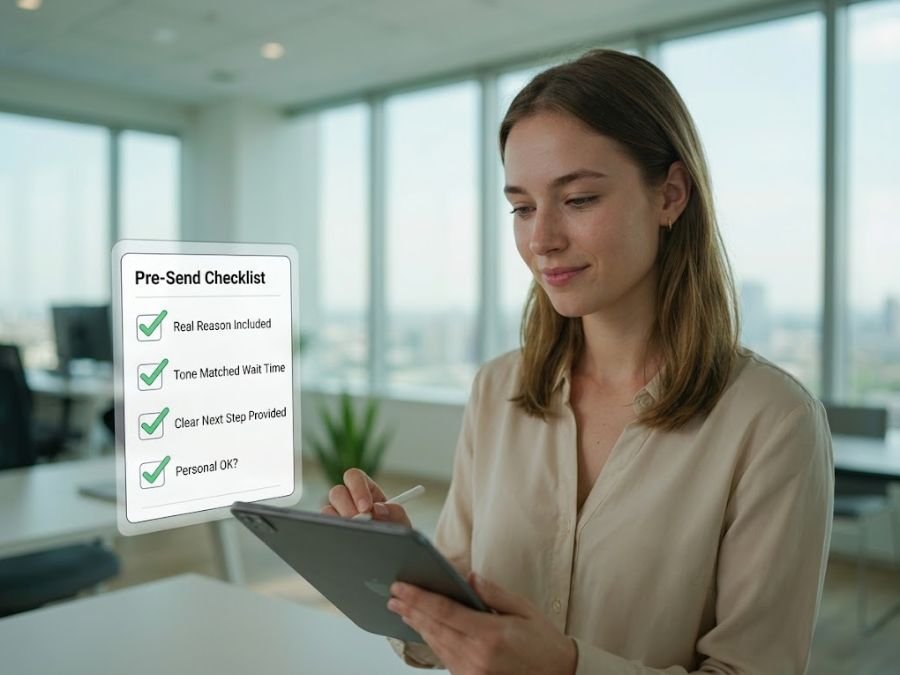
Before sending your message, run it through this fast checklist. It takes ten seconds and saves you from sounding stiff or careless.
- Does it mention the actual reason, even briefly?
- Does the tone match how long they waited?
- Is there a clear next step, not just an apology?
- Would you personally feel okay receiving this message?
If you can say yes to all four, you’re good to go. If not, go back to the A.E.R.T formula and fill in the missing piece. This one habit alone will make your messages feel noticeably more thoughtful over time.
FAQs About Saying “Thanks for Your Patience”
Is “Thanks for your patience” the same as saying sorry?
Not quite. It focuses on gratitude, while “sorry” focuses on the mistake. Using both together often works best.
Should I say this before or after solving the problem?
Both, if possible. Say it once to acknowledge the wait, then again once things are resolved.
Can this phrase sound insincere if overused?
Yes. Repeating it more than once or twice in the same conversation can feel scripted instead of genuine.
What’s a fresher alternative to this phrase?
Try “thanks for sticking with me” or “I really appreciate you waiting this out.”
Does the A.E.R.T. formula work for short texts too?
Yes, just shrink each part to a few words instead of full sentences.
Final Thoughts
Saying thanks for your patience isn’t just good manners, it’s a small tool that changes how people feel about a delay. Use the A.E.R.T formula, match your tone to the wait time, and let your own voice come through instead of a template.
Do that consistently, and people won’t just forgive the wait. They’ll actually remember how well you handled it.